
CONVICTION DESPITE WITNESS TURNED HOSTILE-
it is held by Apex court "In my fieldwork experiences, witnesses become “hostile” not only when they are directly implicated in a case filed by the police, but also when they are on the side of the plaintiff's party. During the often rather long period that elapses between the police investigation and the trial itself, often observed, the party who has lodged the complaint (and who becomes the main witness) can irreparably compromise the case with the other party by means of compensation, threat or blackmail."
The State has a definite role to play in protecting the witnesses, to start with at least in sensitive cases involving those in power, who has political patronage and could wield muscle and money power, to avert trial getting tainted and derailed and truth becoming a casualty. As a protector of its citizens it has to ensure that during a trial in Court the witness could safely depose truth without any fear of being haunted by those against whom he had deposed. Every State has a constitutional obligation and duty to protect the life and liberty of its citizens.
REPORTABLE
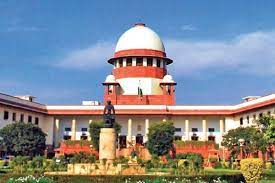
IN THE SUPREME COURT OF INDIA
CRIMINAL APPELLATE JURISDICTION
CRIMINAL APPEAL NO. 2526 OF 2014
|RAMESH AND OTHERS |.....APPELLANT(S) |
|VERSUS | |
|STATE OF HARYANA |.....RESPONDENT(S) |
J U D G M E N T
A.K. SIKRI, J.
The appellants herein were tried and acquitted by the
Sessions Court for offences under Sections 302, 34, 498A of Indian Penal
Code (for short, 'IPC') for which FIR bearing No. 254 dated 28th September,
1999 was registered against them in Police Station Sadar, Bahadurgarh,
District Jhajjar, Haryana. However, the High Court, in appeal, has
overturned the verdict of acquittal, thereby convicting all the four
accused persons (appellants herein). The judgment of the High Court is
dated 30th May, 2014, whereby the appellants are sentenced as under:
“Section 302/34 IPC:- To undergo rigorous imprisonment for life
and to pay a fine of Rs.10,000/-. In default of payment of fine, to
further undergo rigorous imprisonment for one year.
Section 498-A/34 IPC:- To undergo rigorous imprisonment for two
years and to pay a fine of Rs.2,000/-. In default of payment of fine, to
further undergo rigorous imprisonment for six months.”
2. We may state at the outset that the conviction is primarily based
upon the statement of Smt. Roshni, wife of Appellant no. 1, just before her
death. This statement has been taken by the courts below as her 'dying
declaration' and acted upon with the aid of Section 34 of the Indian
Evidence Act, 1872. It is this dying declaration which is the bone of
contention. According to the appellants herein there was no reason to rely
upon the same not only because of certain infirmities therein but also for
the reason of absence of any corroboration. Therefore, before proceeding
further, we would like to reproduce the statement of Roshni (hereinafter
referred to as the 'deceased'). It reads as under:
“.....Stated that it was the time of 3 A.M. today. I was sleeping in my
house at that time. Then my husband Ramesh came and Suresh his brother,
i.e., my devar was also with him. Before this, Ramesh my husband and
Suresh gave beatings to me. Thereafter, my devar Suresh lighted stick of
matchbox. Wife of Suresh and my mother in law namely Saroj and Prem
caught hold. Those both brothers ablazed me. Thereafter, the person who
had caught hold me and who had set me on fire fled away from the spot.
Thereafter, outsider persons came there and put off my fire. I had become
upset. Then I was shifted to Medical College by my devar Suresh and my
mother in law.
My marriage was solemnized 20 years before. I have two sons Manjit and
Ravinder aged about 16 and 15 years. One year ago after giving beatings to
me I was thrown in a well by Ramesh and Suresh. I was taken out from the
well by the villagers. On some occasion they say to bring buffalo and on
some occasion they demand money and scooter. All the persons i.e. my
mother in law, devrani, devar and husband used to beat me. Nothing else i
intend to depose, i am illiterate. I have heard my aforesaid statement,
which is correct and accurate. Admitting it to be correct i put my
signature on it.”
As pointed about above, FIR was registered against the appellants on the
basis of the aforesaid statement which reflects the case of prosecution as
well. Still, in order to have the complete narration of the prosecution
story, we would like to recapitulate the same hereunder.
Marriage between Ramesh (Appellant No. 1) and the deceased was solemnized
20 years before the aforesaid incident. They had two sons out of their
wedlock, namely, Manjit and Ravinder, 16 and 15 years old respectively.
The deceased was being harassed by her husband and in-laws on continuous
demand of dowry which could not be fulfilled by the parents of the
deceased. One year before the incident, she was even thrown in a well by
her husband and younger brother Suresh but was rescued by the villagers.
She was subjected to continuous physical torture and beatings by her
husband, younger brother Suresh, Saroj (wife of Suresh) and Prem (her
mother in-law).
On the fateful day, i.e., 20th September, 1999 when the deceased was
sleeping in the matrimonial house, her husband Ramesh, Suresh, Saroj and
Prem came there. Saroj and Prem caught hold of her from her arms and
Ramesh sprinkled kerosene on her. Suresh lighted a matchstick and set her
ablaze. After setting her ablaze all of them fled away from the spot.
Some persons from her neighbourhood came and extinguished the fire. She
was taken to Post-Graduate Institute of Medical Sciences (PGIMS), Rohtak by
Ramesh, Suresh and Prem. On examination by the doctors in the Post-
Graduate Institute of Medical Sciences, it was found that she was suffering
from 100% burns. An information was sent by Dr. R.P. Verma to Police
intimating admission of the deceased in the hospital. On receipt of this
information, Sub-Inspector Rohtash visited the hospital and collected
medico-legal report of the victim. He moved the application (Ex. PJ) to
the same medical officer seeking his opinion with regard to the fitness of
the patient, that is, to say whether she was in fit state of mind to give
a statement. The doctor declared her fit to make a statement vide
endorsement Ex. PJ/1. On this, the Sub-Inspector approached the Chief
Judicial Magistrate, Rohtak and moved the application (Ex. PH) for deputing
an officer to record her statement. Shri Bhupender Nath, Judicial
Magistrate, First Class, Rohtak was assigned this task vide order Ex.
PH/1. The said Judicial Magistrate visited the hospital and recorded the
statement, which has already been reproduced above. On the basis of the
aforesaid statement, initially the FIR was registered under Section 307,
498A read with Section 34, IPC. However, Roshni succumbed to injuries
within few hours (around 10.30 p.m.) on the same day, i.e., 20th September,
1999. After her death, the FIR was modified by substituting Section 302
IPC in place of Section 307 IPC. Postmortem of the body of the deceased
was conducted. The dead body was also subjected to autopsy by a Board of
Doctors. Investigating Officer also conducted the spot inspection,
prepared rough site plan of the place of occurrence (Ex.PL), took into
possession writing Ex.PD/1, arrested the accused persons, subjected them to
custodial interrogation and in pursuance to their disclosure statement, got
recovered various articles which were taken into possession. On completion
of investigation and other formalities, a report under Section 173(2)
Cr.P.C. was presented before the Court of Jurisdictional Magistrate.
Since an offence under Section 302 IPC is exclusively triable by the Court
of Sessions, case was committed under Section 209 Cr.P.C. by the Magistrate
after having complied with the provisions contained under Section 207
Cr.P.C. It was ultimately entrusted to the Court of Additional Sessions
Judge, Rohtak, for trial.
The Court of Sessions framed the charges against all the accused persons
under Section 302, 498A, IPC with the aid of section 34 IPC. The
appellants pleaded not guilty and opted to contest. With this, trial began
and prosecution examined as many as 14 witnesses. Deposition of these
witnesses, as taken note of by the Trial Court as well as the High Court,
is described in capitulated form hereinafter.
PW-1, Dr. R.P. Verma deposed with regard to admission of the deceased in
PGIMS, Rohtak at 6:40 AM on 20th September, 1999 with 100% burns. He
conducted medico-legal examination and proved copy of MLR (Ex.PA). He also
sent ruqa (Ex.PB) to Police Post, PGIMS, Rohtak, intimating her admission.
PW-2, Constable Jai Chand prepared scaled site plan (Ex.PC) of the place of
occurrence with correct marginal notes on demarcation by Karan Singh.
PW-3, Sardar Singh (father of the deceased), deposed with regard to the
compromise arrived at with the accused Ramesh and others about a year prior
to the occurrence in question. He furnished copy of compromise as well as
that of proceedings initiated under Section 107/151 Cr.P.C. to
Investigating Officer which were taken into possession by him vide Ex.PD.
He did not support prosecution version in respect of occurrence and
ultimately he was declared hostile for toeing the line of the defence.
PW-4, Balraj (brother of the deceased), identified dead body of the
deceased in the hospital. PW-5, Partap, who is one of the relations of the
deceased, was a witness to the recovery memo (Ex.PD/1). PW-6, Constable
Jagdish Chander got conducted autopsy of the dead body of the deceased. PW-
7, Constable Kuldeep Singh was entrusted with the duty of handing over the
special report to the jurisdictional Magistrate as well as senior police
officer.
PW-8, Sub-Inspector Rohtash Singh, conducted initial investigation of this
case. PW-9, Head Constable Balwan Singh, was a member of police party at
the time when accused Ramesh was subjected to interrogation by the Station
House Officer Karan Singh and he suffered disclosure statement (Ex.PM) to
the effect that he had kept concealed an empty plastic container of
kerosene and that he could get the same recovered. Subsequently, in
pursuance to his disclosure statement, he got recovered plastic container
(Ex.P1) from the premises of his residential house which was taken into
possession vide Ex.PN.
PW-10, Inspector Mohar Singh proved proceedings carried by him under
Section 107/151 Cr.P.C. against Ram Phal, son of Chandgi, and Ramesh and
Suresh, sons of Ram Phal, in pursuance of DDR No. 5 dated May 22, 1998,
Police Station, Sadar, Bahadurgarh. He proved copy of the calender
(Ex.PD/2). On receipt of ruqa, he got registered FIR Ex.P1/A on September
20, 1999.
PW-11, Shri Bhupender Nath, Judicial Magistrate Ist Class, who recorded
dying declaration of the deceased, proved the same as Ex. PH/3, on the
basis of which formal FIR was put in black & white and investigation was
put in motion.
PW-12, Dr. Neelam Thapar, Medical Officer, General Hospital, Rohtak, being
a member of the Medical Board, conducted autopsy on the dead body of Smt.
Roshni and deposed as under:
“....Length of the body was 160 C.M. A mod build and mod nourished dead
body of female, wearing no clothes having white metal ring in body side 2nd
toes. No mark of ligature on the neck and dissection etc. present. R.M.
present in all four limbs. The injuries are follows:-
“1. Superficial to be deep infected burns present all over the body
except both feet.
2. There is red line of demarcation between burn and non-burn areas.
3. Singing of hair present over scalp, external genetalia and both
axilla.
4. Scalp, skull and vertebrae described, membranes brain healthy and
congested walls, ribs and cartridges described.
Pleura healthy, larynx and trachea healthy, both lungs healthy and
congested.
Right side heart contains blood, left side of heart empty. Abdominal wall
described. Peritoneum healthy. Mouth, pharynx and oesophagus healthy,
stomach and its contents healthy and congested. Stomach contains 50css of
mucoid juices. Small intestines and their contents healthy and congested
and large intestine contain faecal matter. Liver, spleen, kidneys healthy
and congested. Bladder empty. Organs of generation external and internal
external genetalia-hair burn and uterus does not have any product of
conception.
In our opinion the cause of death of deceased was burn and its complication
where were ante mortem in nature and sufficient to cause the death in
natural course of nature.....”
On the conclusion of the prosecution evidence, incriminating circumstances
appearing on record were put to the accused persons for eliciting their
explanation thereto, as per the procedure mandated under Section 313 of the
Cr.P.C. They denied having any role and pleaded that it was a case of
accidental fire in which the deceased was trapped. Since identical defence
plea was taken by all the accused persons, our purpose would be served in
reproducing the statement of Ramesh (Appellant No.1) which runs as under :
“I am innocent. I was living separate from the rest of the family after
dispute was settled in May, 1998 as declared by the deceased Smt. Roshni.
On the night between 19/20/9.1999, I was at my in laws house at Nizampur,
Delhi along with my truck and early in the morning at 4.00 A.M. a
telephonic message was received that Smt. Roshni has received burn injuries
due to falling of kerosene lamp and is being referred to PGI, Rohtak and
got her admitted in the hospital. I or any of my family members have never
harassed Smt. Roshni for dowry or otherwise. After compromise, she was
living happily with me. It seems that since she has tutored her to make
she alleged statement before JMIC.”
The trial court, after appraising the evidence on record, in the light of
oral arguments which were advanced by both the sides, held that the
prosecution could not prove the guilt of the appellants beyond reasonable
doubt. As per the trial court, the dying declaration of the victim could
not be acted upon for the purpose of conviction in view of the following
attendant circumstances:
(a) The Judicial Magistrate (PW-11) had stated during his cross-
examination that he could not say if the deceased was semi-conscious when
he recorded her statement and he had proceeded to record her statement
because the Doctor had given his opinion that she was in fit state of mind
to give the statement.
(b) Balraj (PW-4), who is the brother of the deceased had stated during
the cross-examination that deceased husband Ramesh (appellant No.1) had
come to his house and stayed with him on the night intervening 19th-20th
September, 1999. He further deposed that on 20th September, 1999 at 4:00
a.m., they had received information about the deceased catching fire and on
hearing this news, he along with Ramesh had gone to Rohtak, where the
deceased was already lying admitted in the hospital. PW-4 had also deposed
to the effect that he had a talk with the deceased who disclosed him that
she had received burn injuries as an earthern lamp had fallen on her.
The trial court believed the aforesaid statement of PW-4 who is
none else than the brother of the deceased and concluded that had the
appellants committed murder of his sister, he would not have any soft
corner for these accused persons. The trial court also observed that as
per the statement of PW-4, since appellant No. 1 Ramesh was with him at the
time of the incident, he had been falsely implicated in the case.
(c) The trial court also took into consideration the conduct of other
appellants, namely, Suresh (brother of Ramesh), his wife Saroj and Prem
(mother of Ramesh) who had taken the deceased to the hospital i.e. PGIMS,
Rohtak for treatment. Commenting upon this, the trial court observed that
had they poured kerosene on the deceased and set her on fire with intention
to cause her death, they would not have taken her to the hospital for
treatment and they would not have got evidence created against themselves.
(d) As per the trial court, the dying declaration of the deceased was also
intrinsically weak and was not trustworthy.
This conclusion was arrived at by analysing the episode in the
following manner:
“...Roshni was sleeping in the house when she caught fire at 3:00 AM on
20.09.1999. Four persons were not required to commit her murder by getting
her on fire. When she was sleeping one person could easily pour kerosene
and set her on fire. Allegations made by Roshni in her statement Ex.PH/3
that Saroj and Prem caught hold of her and Ramesh poured kerosene on her
and Suresh lighted fire, appears to be concocted and unnatural.”
On the aforesaid circumstances, the Court of Sessions held that it was not
safe to place reliance upon the dying declaration and the possibility that
the deceased committed suicide by dousing herself with kerosene and setting
herself on fire and thereafter falsely implicating the appellants, could
not be ruled out in order to take revenge against them for their perceived
past misbehaviour.
The High Court, in the impugned judgment, has found fault with the
aforesaid analysis, approach and the manner in which the dying declaration
has been dealt with by the trial court. According to the High Court, the
veracity of the dying declaration could not be examined with reference to
the other evidence. It has held that the approach of the trial court was
blemished. According to the High Court, the trial court was required to
appreciate as to whether the statement of the deceased was given in a fit
state of mind; and whether it was voluntarily given without being
influenced by any extraneous circumstances and without any tutory. If that
was so and the dying declaration of the deceased passed the muster of the
aforesaid test and was to be believed, the conviction could be based solely
on such a dying declaration. The High Court then examined the dying
declaration in the aforesaid perspective and found that the Doctor had
declared her fit to make a statement on the basis of which the Judicial
Magistrate recorded the statement and even after recording of the
statement, the Doctor again gave endorsement that the deceased remained fit
during the period her statement was recorded. In such circumstances,
statement of the Judicial Magistrate (PW-11) in the Court that he could not
say whether the deceased was semi-conscious when her statement was
recorded, was of no consequence as he had acted on the basis of the medical
opinion. The High Court has also observed that PW-11 never stated in
categorical terms that the deceased was semi-conscious when her statement
was recorded and, therefore, the said reply of PW-11 in cross-examination
was read out of context. The High Court further observed that it was not
appropriate on the part of the trial court to discard the dying declaration
in view of the deposition of her brother Balraj (PW-4). As per the High
Court, not only PW-4 but his father (PW-3) had not supported the statement
for the reasons best known to them and it appeared that they had been won
over by the appellants. The High Court also noted that merely because the
deceased had suffered 100% burns was no ground to discard the dying
declaration when there was a specific certificate given by the Doctor about
her mental fitness and that she was capable of giving the statement.
Learned counsel for the appellants challenged the correctness of the manner
in which the High Court has pondered over the issue. In the first
instance, he submitted that it was a case of acquittal by the trial court
after due appreciation of evidence on record and even when two views were
possible, the High Court should not have tinkered with the acquittal. He
also insisted that the trial court had given cogent reasons for not
believing the dying declaration and one of the most material circumstance
was that on the fateful night when the incident occurred, appellant No.1
(husband of the deceased) was with PW-4 and it clearly demonstrated that
appellant No.1 was falsely roped in. Therefore, it could not be said that
the deceased had given an honest and truthful statement. He further
submitted that having suffered 100% burns, under no circumstances could she
be in a position to give the statement and, therefore, certificate of
Doctor should not have been believed.
Learned counsel for the respondent, on the other hand, submitted that
incident took place in the matrimonial house and the deceased had given the
statement after reaching the hospital. The authorities were fully
satisfied that she was in a position to give the statement. Therefore,
there was no reason to discard the statement as was wrongly done by the
trial court. He, thus, supported the reasons given by the High Court.
We have duly appreciated the submissions advanced by counsel for the
parties on both sides. No doubt, the High Court was dealing with the
appeal against the judgment of the trial court which had acquitted the
appellants herein. The scope of interference in an appeal against
acquittal is undoubtedly narrower than the scope of appeal against
conviction. Section 378 of the Code of Criminal Procedure, 1973 confers
upon the State a right to prefer an appeal to the High Court against the
order of acquittal. At the same time, sub-section (3) thereof mandates
that such an appeal is not to be entertained except with the leave of the
High Court. Thus, before an appeal is entertained on merits, leave of the
High Court is to be obtained which means that normally judgment of
acquittal of the trial court is attached a definite value which is not to
be ignored by the High Court. In other words, presumption of innocence in
favour of an accused gets further fortified or reinforced by an order of
acquittal. At the same time, while exercising its appellate power, the
High Court is empowered to reappreciate, review and reconsider the evidence
before it. However, this exercise is to be undertaken in order to come to
an independent conclusion and unless there are substantial and compelling
reasons or very strong reasons to differ from the findings of acquittal
recorded by the trial court, the High Court, as an appellate court in an
appeal against the acquittal, is not supposed to substitute its findings in
case the findings recorded by the trial court are equally plausible. The
scope of interference by the appellate court in an order of acquittal is
beautifully summed up in the case of Sanwat Singh v. State of Rajasthan[1]
in the following words:
“The foregoing discussion yields the following results: (1) an appellate
court has full power to review the evidence upon which the order of
acquittal is founded; (2) the principles laid down in Sheo Swarup's case
afford a correct guide for the appellate court's approach to a case in
disposing of such an appeal; and (3) the different phraseology used in the
judgments of this Court, such as, (i) "substantial and compelling reasons",
(ii) "good and sufficiently cogent reasons", and (iii) "strong reasons" are
not intended to curtail the undoubted power of an appellate court in an
appeal against acquittal to review the entire evidence and to come to its
own conclusion; but in doing so it should not only consider every matter on
record having a bearing on the questions of fact and the reasons given by
the court below in support of its order of acquittal in its arriving at a
conclusion on those facts, but should also express those reasons in its
judgment, which lead it to hold that the acquittal was not justified.”
This legal position is reiterated in Govindaraju @ Govinda v. State by
Sriramapuram Police Station and another[2] and the following passage
therefrom needs to be extracted:
“12. The legislature in its wisdom, unlike an appeal by an accused in the
case of conviction, introduced the concept of leave to appeal in terms of
Section 378 CrPC. This is an indication that appeal from acquittal is
placed on a somewhat different footing than a normal appeal. But once leave
is granted, then there is hardly any difference between a normal appeal and
an appeal against acquittal. The concept of leave to appeal under Section
378 CrPC has been introduced as an additional stage between the order of
acquittal and consideration of the judgment by the appellate court on
merits as in the case of a regular appeal. Sub-section (3) of Section 378
clearly provides that no appeal to the High Court under sub-section (1) or
(2) shall be entertained except with the leave of the High Court. This
legislative intent of attaching a definite value to the judgment of
acquittal cannot be ignored by the courts.
13. Under the scheme of CrPC, acquittal confers rights on an accused that
of a free citizen. A benefit that has accrued to an accused by the judgment
of acquittal can be taken away and he can be convicted on appeal, only when
the judgment of the trial court is perverse on facts or law. Upon
examination of the evidence before it, the appellate court should be fully
convinced that the findings returned by the trial court are really
erroneous and contrary to the settled principles of criminal law.”
The Court also took note of earlier precedents and summarised the legal
position laid down in those cases, in the following words:
“17. If we analyse the above principle somewhat concisely, it is obvious
that the golden thread which runs through the web of administration of
justice in criminal cases is that if two views are possible on the evidence
adduced in a case, one pointing to the guilt of the accused and the other
to his innocence, the view which is favourable to the accused should be
adopted.
18. There are no jurisdictional limitations on the power of the appellate
court but it is to be exercised with some circumspection. The paramount
consideration of the court should be to avoid miscarriage of justice. A
miscarriage of justice which may arise from the acquittal of guilty is no
less than that from the conviction of an innocent. If there is miscarriage
of justice from the acquittal, the higher court would examine the matter as
a court of fact and appeal while correcting the errors of law and in
appreciation of evidence as well. Then the appellate court may even proceed
to record the judgment of guilt to meet the ends of justice, if it is
really called for.
xx xx xx
22. A very vital distinction which the court has to keep in mind while
dealing with such appeals against the order of acquittal is that
interference by the court is justifiable only when a clear distinction is
kept between perversity in appreciation of evidence and merely the
possibility of another view. It may not be quite appropriate for the High
Court to merely record that the judgment of the trial court was perverse
without specifically dealing with the facets of perversity relating to the
issues of law and/or appreciation of evidence, as otherwise such
observations of the High Court may not be sustainable in law.”
The appellate court, therefore, is within its power to reappreciate or
review the evidence on which the acquittal is based. On reconsideration of
the evidence on record, if the appellate court finds the verdict of
acquittal to be perverse or against the settled position of law, it is duly
empowered to set aside the same. On the other hand, if the trial court had
appreciated the evidence in right perspective and recorded the findings
which are plausible and the view of the trial court does not suffer from
perversity, simply because the appellate court comes to a different
conclusion on the appreciation of the evidence on record, it will not
substitute its findings to that of findings recorded by the trial court.
In the instant case, we find that the High Court has interfered on the
ground that the very approach of the trial court in appreciating the
evidence on record was legally unsustainable. If such observations of the
High Court are correct, it was fully justified in interjecting with the
verdict of the trial court.
We have already noticed above the reasons recorded by the trial court while
discarding the dying declaration. Admittedly, no weightage is given by the
trial court to the opinion of the Doctor certifying that the deceased was
in a fit state of mind. Likewise, no reasons were given by the trial court
as to why the testimony of the Judicial Magistrate, who recorded the
statement, be disbelieved.
Law on the admissibility of the dying declarations is well settled. In Jai
Karan v. State of N.C.T., Delhi[3], this Court explained that a dying
declaration is admissible in evidence on the principle of necessity and can
form the basis of conviction if it is found to be reliable. In order that
a dying declaration may form the sole basis for conviction without the need
for independent corroboration it must be shown that the person making it
had the opportunity of identifying the person implicated and is thoroughly
reliable and free from blemish. If, in the facts and circumstances of the
case, it is found that the maker of the statement was in a fit state of
mind and had voluntarily made the statement on the basis of personal
knowledge without being influenced by others and the court on strict
scrutiny finds it to be reliable, there is no rule of law or even of
prudence that such a reliable piece of evidence cannot be acted upon unless
it is corroborated. A dying declaration is an independent piece of
evidence like any other piece of evidence, neither extra strong or weak,
and can be acted upon without corroboration if it is found to be otherwise
true and reliable. There is no hard and fast rule of universal application
as to whether percentage of burns suffered is determinative factor to
affect credibility of dying declaration and improbability of its recording.
Much depends upon the nature of the burn, part of the body affected by the
burn, impact of the burn on the faculties to think and convey the idea or
facts coming to mind and other relevant factors. Percentage of burns alone
would not determine the probability or otherwise of making dying
declaration. Physical state or injuries on the declarant do not by
themselves become determinative of mental fitness of the declarant to make
the statement (See Rambai v. State of Chhatisgarh[4]).
It is immaterial to whom the declaration is made. The declaration may be
made to a Magistrate, to a Police Officer, a public servant or a private
person. It may be made before the doctor; indeed, he would be the best
person to opine about the fitness of the dying man to make the statement,
and to record the statement, where he found that life was fast ebbing out
of the dying man and there was no time to call the Police or the
Magistrate. In such a situation the Doctor would be justified, rather duty
bound, to record the dying declaration of the dying man. At the same time,
it also needs to be emphasised that in the instant case, dying declaration
is recorded by a competent Magistrate who was having no animus with the
accused persons. As held in Kushal Rao v. State of Bombay[5], this kind of
dying declaration would stand on a much higher footing. After all, a
competent Magistrate has no axe to grind against the person named in the
dying declaration of the victim and in the absence of circumstances showing
anything to the contrary, he should not be disbelieved by the Court (See
Vikas & Ors. v. State of Maharashtra[6]).
No doubt, the victim has been brought with 100% burn injuries.
Notwithstanding, the doctor found that she was in a conscious state of mind
and was competent to give her statement. Thus, the Magistrate had taken
due precautions and, in fact, Medical Officer remained present when the
dying declaration was being recorded. Therefore, this dying declaration
cannot be discarded merely going by the extent of burns with which she was
suffering, particularly, when the defence has not been able to elicit
anything from the cross-examination of the doctor that her mental faculties
had totally impaired rendering her incapable of giving a statement.
Keeping in view the aforesaid considerations, we feel that High Court
rightly observed that the manner in which the trial court proceeded with
the matter was legally unsustainable. It was necessary for the trial
court, in the first instance, to see as to whether due precautions were
taken before recording the statement of the deceased, which became dying
declaration as she died within few hours thereafter. In this context, what
is relevant is that the moment the deceased was admitted in PGIMS, Rohtak,
without any loss of time and immediately thereafter the Doctor at the said
hospital sent the information to the police post about her admission in the
hospital with burns. On receipt of that information, Sub-Inspector visited
the hospital and collected Medical Report of the deceased. He immediately
moved an application before the concerned Medical Officer seeking his
opinion with regard to the fitness of the patient. On that application
itself (Ex. PG), the Doctor made an endorsement (Ex. PG/1) that she was fit
to make statement. Sub-Inspector did not record the statement of the
deceased himself. Rather, he took due precaution by approaching the Chief
Judicial Magistrate, Rohtak with an application (Ex. PH) requesting him to
depute an officer to record the statement of the deceased. On this
application, orders were passed (Ex. PH/1) directing Bhupinder Nath,
Judicial Magistrate, First Class, Rohtak to go to the hospital and record
the statement. Armed with this order, the Magistrate reached the hospital
and recorded the statement of the deceased. This recording was done in the
presence of the Doctor who again certified that she had given the statement
in a fit state of mind.
Aforesaid narration stating the manner in which statement of the deceased
was recorded clearly brings out that all possible precautions were taken by
the concerned authorities before and while recording her statement. The
trial court in its judgment has not even discussed the aforesaid aspects.
The recording of statement by the Judicial Magistrate is sought to be
discredited on the specious ground that in his cross-examination he has
stated that he could not say whether the deceased was semi-conscious. The
High Court has rightly recorded that this statement of PW-11 is read out of
context. The aforesaid answer by PW-11 was in reply to the question put to
him as to whether the deceased was semi-conscious when her statement was
recorded by him. It is in reply to this question he stated that he cannot
say if she was semi-conscious when her statement was recorded. He also
clarified that since the Doctor had given his opinion, he proceeded to
record her statement. It may be noticed that PW-11 nowhere stated that the
deceased was semi-conscious when her statement was recorded. The statement
of PW-11 was to be taken into consideration as a whole. It has come on
record, and we repeat, that after the completion of her statement, the
Doctor made an endorsement (Ex. PH/4) to the effect that the deceased
remained fit during the recording of her statement and it is only
thereafter the learned Magistrate (PW-11) appended his signature (Ex. PH/5)
categorically stating that the statement recorded by him was true version
of what the deceased had spoken and he had stated in unambiguous terms that
she was fit to make statement and remained fit till her statement was
recorded.
In view of the specific certification by the Doctor about the fitness of
the deceased that she remained fit while recording the statement, the mere
effect that she had suffered 100% burns would not, ipso facto, lead to the
conclusion that the deceased was unconscious or that she was not in a
proper state of mind to make a statement. At this stage, it would also be
relevant to point out that no challenge was made by the defence to the
aforesaid statement of the deceased on the ground that it was not made
voluntarily or it was made by any extraneous circumstances or was the
result of tutoring. In fact, even as per the appellants, it is they who
had taken the deceased to the hospital and no other person known to her had
come in her contact before the statement was recorded. On the contrary, PW-
3 and PW-4 (father and brother of the deceased respectively) have not
supported the prosecution version, which aspect shall be dealt with later
at the appropriate stage and, therefore, the question of tutoring does not
arise at all.
On examination and analysis of the dying declaration in the aforesaid
perspective, we do not find any reason to discard it having regard to the
legal position on the subject already noticed above by referring to
relevant case law. It is trite that dying declaration is a substantive
piece of evidence and can be made the basis of conviction once the Court is
convinced that dying declaration is made voluntarily and is not influenced
by any extraneous circumstances.
There is one more reason that was given by the trial court in discarding
the dying declaration and if correct, that would afford strong circumstance
to justify its conclusion. It is the PW-4 who has come as a shield to
protect the appellants. For this reason, we advert to the statement of
Balraj (PW-4), brother of the deceased. He stated that on the night
intervening 19th – 20th September, 1999, Ramesh was with him. He further
deposed that at 4:00 a.m. on 20th September, 1999, they received the
information about the deceased having sustained burn injuries and he along
with Ramesh reached PGIMS, Rohtak where she was already present. It is on
the basis of this statement that the trial court observed that since Ramesh
was with Balraj (PW-4) in his house, he could not be present at the place
of incident when it took place and, therefore, he is falsely implicated and
mentioning of his name considerably dents the veracity of dying declaration
thereby rendering it questionable. However, we find that in accepting the
aforesaid version of PW-4, the trial court committed a serious mistake. As
per the hospital records, it is Ramesh who had brought the deceased to the
hospital and got her admitted which was even the defence case as well. The
trial court completely overlooked this pertinent aspect. This fact alone
is sufficient to discredit the statement of PW-4 that Ramesh was with him
in his house and both of them had received the information about the
incident and when both of them reached PGIMS, Rohtak, the deceased was
already there. In these circumstances, we entirely agree with the High
Court that PW-4, though brother of the deceased, appears to have been won
over by the appellants.
We find that it is becoming a common phenomenon, almost a regular feature,
that in criminal cases witnesses turn hostile. There could be various
reasons for this behaviour or attitude of the witnesses. It is possible
that when the statements of such witnesses were recorded under Section 161
of the Code of Criminal Procedure, 1973 by the police during investigation,
the Investigating Officer forced them to make such statements and,
therefore, they resiled therefrom while deposing in the Court and
justifiably so. However, this is no longer the reason in most of the
cases. This trend of witnesses turning hostile is due to various other
factors. It may be fear of deposing against the accused/delinquent or
political pressure or pressure of other family members or other such
sociological factors. It is also possible that witnesses are corrupted
with monetary considerations.
In some of the judgments in past few years, this Court has commented upon
such peculiar behaviour of witnesses turning hostile and we would like to
quote from few such judgments. In Krishna Mochi v. State of Bihar[7],
this Court observed as under:
“31. It is matter of common experience that in recent times there has been
sharp decline of ethical values in public life even in developed countries
much less developing one, like ours, where the ratio of decline is higher.
Even in ordinary cases, witnesses are not inclined to depose or their
evidence is not found to be credible by courts for manifold reasons. One of
the reasons may be that they do not have courage to depose against an
accused because of threats to their life, more so when the offenders are
habitual criminals or high-ups in the Government or close to powers, which
may be political, economic or other powers including muscle power.”
Likewise, in Zahira Habibullah v. State of Gujarat[8], this Court
highlighted the problem with following observations:
“40. Witnesses, as Bentham said, are the eyes and ears of justice. Hence,
the importance and primacy of the quality of trial process. If the witness
himself is incapacitated from acting as eyes and ears of justice, the trial
gets putrefied and paralysed and it no longer can constitute a fair trial.
The incapacitation may be due to several factors like the witness being not
in a position for reasons beyond control, to speak the truth in the court
or due to negligence or ignorance or some corrupt collusion. Time has
become ripe to act on account of numerous experiences faced by the court on
account of frequent turning of witnesses as hostile, either due to threats,
coercion, lures and monetary considerations at the instance of those in
power, their henchmen and hirelings, political clouts and patronage and
innumerable other corrupt practices ingeniously adopted to smother and
stifle truth and realities coming out to surface. Broader public and social
interest require that the victims of the crime who are not ordinarily
parties to prosecution and the interests of State representing by their
presenting agencies do not suffer… there comes the need for protecting the
witnesses. Time has come when serious and undiluted thoughts are to be
bestowed for protecting witnesses so that ultimate truth presented before
the Court and justice triumphs and that the trial is not reduced to
mockery.
41. The State has a definite role to play in protecting the witnesses, to
start with at least in sensitive cases involving those in power, who has
political patronage and could wield muscle and money power, to avert trial
getting tainted and derailed and truth becoming a casualty. As a protector
of its citizens it has to ensure that during a trial in Court the witness
could safely depose truth without any fear of being haunted by those
against whom he had deposed. Every State has a constitutional obligation
and duty to protect the life and liberty of its citizens. That is the
fundamental requirement for observance of the rule of law. There cannot be
any deviation from this requirement because of any extraneous factors like,
caste, creed, religion, political belief or ideology. Every State is
supposed to know these fundamental requirements and this needs no
retaliation. We can only say this with regard to the criticism levelled
against the State of Gujarat. Some legislative enactments like the
Terrorist and Disruptive Activities (Prevention) Act, 1987 (in short the
“TADA Act”) have taken note of the reluctance shown by witnesses to depose
against people with muscle power, money power or political power which has
become the order of the day. If ultimately truth is to be arrived at, the
eyes and ears of justice have to be protected so that the interests of
justice do not get incapacitated in the sense of making the proceedings
before Courts mere mock trials as are usually seen in movies.”
Likewise, in Sakshi v. Union of India[9], the menace of witnesses turning
hostile was again described in the following words:
“32. The mere sight of the accused may induce an element of extreme fear in
the mind of the victim or the witnesses or can put them in a state of
shock. In such a situation he or she may not be able to give full details
of the incident which may result in miscarriage of justice. Therefore, a
screen or some such arrangement can be made where the victim or witnesses
do not have to undergo the trauma of seeing the body or the face of the
accused. Often the questions put in cross-examination are purposely
designed to embarrass or confuse the victims of rape and child abuse. The
object is that out of the feeling of shame or embarrassment, the victim may
not speak out or give details of certain acts committed by the accused. It
will, therefore, be better if the questions to be put by the accused in
cross-examination are given in writing to the Presiding Officer of the
Court, who may put the same to the victim or witnesses in a language which
is not embarrassing. There can hardly be any objection to the other
suggestion given by the petitioner that whenever a child or victim of rape
is required to give testimony, sufficient breaks should be given as and
when required. The provisions of sub-section (2) of section 327 Cr.P.C.
should also apply in inquiry or trial of offences under Section 354 and 377
IPC.”
In State v. Sanjeev Nanda[10], the Court felt constrained in reiterating
the growing disturbing trend:
“99. Witness turning hostile is a major disturbing factor faced by the
criminal courts in India. Reasons are many for the witnesses turning
hostile, but of late, we see, especially in high profile cases, there is a
regularity in the witnesses turning hostile, either due to monetary
consideration or by other tempting offers which undermine the entire
criminal justice system and people carry the impression that the mighty and
powerful can always get away from the clutches of law thereby, eroding
people’s faith in the system.
100. This court in State of U.P. v. Ramesh Mishra and Anr. [AIR 1996 SC
2766] held that it is equally settled law that the evidence of hostile
witness could not be totally rejected, if spoken in favour of the
prosecution or the accused, but it can be subjected to closest scrutiny and
that portion of the evidence which is consistent with the case of the
prosecution or defence may be accepted. In K. Anbazhagan v. Superintendent
of Police and Anr., (AIR 2004 SC 524), this Court held that if a court
finds that in the process the credit of the witness has not been completely
shaken, he may after reading and considering the evidence of the witness as
a whole with due caution, accept, in the light of the evidence on the
record that part of his testimony which it finds to be creditworthy and act
upon it. This is exactly what was done in the instant case by both the
trial court and the High Court and they found the accused guilty.
101. We cannot, however, close our eyes to the disturbing fact in the
instant case where even the injured witness, who was present on the spot,
turned hostile. This Court in Sidhartha Vashisht @ Manu Sharma v. State
(NCT of Delhi), (2010) 6 SCC 1 and in Zahira Habibullah Shaikh v. State of
Gujarat, AIR 2006 SC 1367, had highlighted the glaring defects in the
system like non-recording of the statements correctly by the police and the
retraction of the statements by the prosecution witness due to
intimidation, inducement and other methods of manipulation. Courts,
however, cannot shut their eyes to the reality. If a witness becomes
hostile to subvert the judicial process, the Courts shall not stand as a
mute spectator and every effort should be made to bring home the truth.
Criminal judicial system cannot be overturned by those gullible witnesses
who act under pressure, inducement or intimidation. Further, Section 193 of
the IPC imposes punishment for giving false evidence but is seldom
invoked.”
On the analysis of various cases, following reasons can be discerned which
make witnesses retracting their statements before the Court and turning
hostile:
“(i) Threat/intimidation.
(ii) Inducement by various means.
(iii) Use of muscle and money power by the accused.
(iv) Use of Stock Witnesses.
(v) Protracted Trials.
(vi) Hassles faced by the witnesses during investigation and trial.
(vii) Non-existence of any clear-cut legislation to check hostility of
witness.”
Threat and intimidation has been one of the major causes for the hostility
of witnesses. Bentham said: “witnesses are the eyes and ears of justice”.
When the witnesses are not able to depose correctly in the court of law, it
results in low rate of conviction and many times even hardened criminals
escape the conviction. It shakes public confidence in the criminal justice
delivery system. It is for this reason there has been a lot of discussion
on witness protection and from various quarters demand is made for the
State to play a definite role in coming out with witness protection
programme, at least in sensitive cases involving those in power, who have
political patronage and could wield muscle and money power, to avert trial
getting tainted and derailed and truth becoming a casualty. A stern and
emphatic message to this effect was given in Zahira Habibullah's case as
well.
Justifying the measures to be taken for witness protection to enable the
witnesses to depose truthfully and without fear, Justice Malimath Committee
Report on Reforms of Criminal Justice System, 2003 has remarked as under:
“11.3 Another major problem is about safety of witnesses and their family
members who face danger at different stages. They are often threatened and
the seriousness of the threat depends upon the type of the case and the
background of the accused and his family. Many times crucial witnesses are
threatened or injured prior to their testifying in the court. If the
witness is still not amenable he may even be murdered. In such situations
the witness will not come forward to give evidence unless he is assured of
protection or is guaranteed anonymity of some form of physical
disguise…Time has come for a comprehensive law being enacted for protection
of the witness and members of his family.”
Almost to similar effect are the observations of Law Commission of India in
its 198th Report[11], as can be seen from the following discussion therein:
“The reason is not far to seek. In the case of victims of terrorism and
sexual offences against women and juveniles, we are dealing with a section
of society consisting of very vulnerable people, be they victims or
witnesses. The victims and witnesses are under fear of or danger to their
lives or lives of their relations or to their property. It is obvious that
in the case of serious offences under the Indian Penal code, 1860 and other
special enactments, some of which we have referred to above, there are
bound to be absolutely similar situations for victims and witnesses. While
in the case of certain offences under special statutes such fear or danger
to victims and witnesses may be more common and pronounced, in the case of
victims and witnesses involved or concerned with some serious offences,
fear may be no less important. Obviously, if the trial in the case of
special offences is to be fair both to the accused as well as to the
victims/witnesses, then there is no reason as to why it should not be
equally fair in the case of other general offences of serious nature
falling under the Indian Penal Code, 1860. It is the fear or danger or
rather the likelihood thereof that is common to both cases. That is why
several general statutes in other countries provide for victim and witness
protection.”
Apart from the above, another significant reason for witnesses turning
hostile may be what is described as 'culture of compromise'. Commenting
upon such culture in rape trials, Pratiksha Bakshi[12] has highlighted this
problem in the following manner:
“During the trial, compromise acts as a tool in the hands of defence
lawyers and the accused to pressurise complainants and victims to change
their testimonies in a courtroom. Let us turn to a recent case from Agra
wherein a young Dalit woman was gang-raped and the rapist let off on bail.
The accused threatened to rape the victim again if she did not compromise.
Nearly a year after she was raped, she committed suicide. While we find
that the judgment records that the victim committed suicide following the
pressure to compromise, the judgment does not criminalise the pressure to
compromise as criminal intimidation of the victim and her family. The
normalising function of the socio-legal category of compromise converts
terror into a bargain in a context where there is no witness protection
programme. This often accounts for why prosecution witnesses routinely turn
hostile by the time the case comes on trial, if the victim does not lose
the will to live.
In other words, I have shown how legality is actually perceived
as disruptive of sociality; in this instance, a sociality that is marked by
caste based patriarchies, such that compromise is actively perceived, to
put it in the words of a woman judge of a district court, as a mechanism
for ‘restoring social relations in society’.”
In this regard, two articles by Daniela Berti delve into a sociological
analysis of hostile witnesses, noting how village compromises (and possibly
peer pressure) are a reason for witnesses turning hostile. In one of his
articles[13], he writes:
“For reasons that cannot be explained here, even the people who initiate a
legal case may change their minds later on and pursue non-official forms of
compromise or adjustment. Ethnographic observations of the cases that do
make it to the criminal courtroom thus provide insight into the kinds of
tensions that arise between local society and the state judicial
administration. These tensions are particularly palpable when witnesses
deny before the judge what they allegedly said to the police during
preliminary investigations. At this very moment they often become hostile.
Here I must point out that the problem of what in common law terminology is
called “hostile witnesses” is, in fact, general in India and has provoked
many a reaction from judges and politicians, as well as countless debates
in newspaper editorials. Although this problem assumes particular relevance
at high-profile, well-publicized trials, where witnesses may be politically
pressured or bribed, it is a recurring everyday situation with which judges
and prosecutors of any small district town are routinely faced. In many
such cases, the hostile behavior results from various dynamics that
interfere with the trial's outcome – village or family solidarity, the
sharing of the same illegal activity for which the accused has been
incriminated (as in case of cannabis cultivation), political interests,
family pressures, various forms of economic compensation, and so forth.
Sometimes the witness becomes “hostile” simply because police records of
his or her earlier testimony are plainly wrong. Judges themselves are well
aware that the police do write false statements for the purpose of
strengthening their cases. Though well known in judicial milieus, the
dynamics just described have not yet been studied as they unfold over the
course of a trial. My research suggests, however, that the witness's
withdrawal from his or her previous statement is a crucial moment in the
trial, one that clearly encapsulates the tensions arising between those
involved in a trial and the court machinery itself.”
“In my fieldwork experiences, witnesses become “hostile” not only when they
are directly implicated in a case filed by the police, but also when they
are on the side of the plaintiff's party. During the often rather long
period that elapses between the police investigation and the trial itself,
I often observed, the party who has lodged the complaint (and who becomes
the main witness) can irreparably compromise the case with the other party
by means of compensation, threat or blackmail.”
Present case appears to have been stung by 'culture of compromise'.
Fortunately, statement of PW-4 in attempting to shield the accused Ramesh
has been proved to be false in view of the records of PGIMS, Rohtak and,
therefore, we held that High Court was right in discarding his testimony.
We, thus, do not find any merit in this appeal, which is accordingly
dismissed.
.............................................J.
(A.K. SIKRI)
.............................................J.
(AMITAVA ROY)
NEW DELHI;
NOVEMBER 22, 2016.
-----------------------
[1] 1961 SCR (3) 120
[2] (2012) 4 SCC 722
[3] (1999) 8 SCC 161
[4] (2002) 8 SCC 83)
[5] 1958 SCR 552
[6] (2008) 2 SCC 516
[7] (2002) 6 SCC 81
[8] (2006) 3 SCC 374
[9] (2004) 5 SCC 518
[10] (2012) 8 SCC 450
[11] Report on 'witness identity protection and witness protection
programmes'
[12] In Justice is a Secret : Compromise in Rape Trials”
[13] Daniela Berti : Courts of Law and Legal Practice (pp. 6-7)